EdS in School Psychology with Pupil Personnel Services Credential
Work within the school system to improve children’s lives.

EdS in School Psychology Online Program Overview
In the educational specialist (EdS) in school psychology with pupil personnel services (PPS) credential program, you’ll specialize in offering services and support to help children surmount challenges. As a school psychologist, you’ll work closely with students and families to develop individualized education programs to help them with social emotional, behavioral, and academic concerns. You’ll learn how to use data and science to assess strengths and areas for growth to help students thrive in school.
This school psychology graduate program also prepares you for the pupil personnel services (PPS) credential, allowing you to practice in California’s schools. You don’t need a psychology background to attain this School Psychology Ed degree, but you should have an awareness of the challenges children face, and want to help them and their families. An EdS in school psychology with a PPS credential can lead to a fulfilling and rewarding career that helps you improve the lives of students.
The EdS in School Psychology with PPS credential provides an emphasis in school-based mental health, preparing you to address more complex social-emotional concerns and consider the bigger picture of each student’s educational and social-emotional environment. School psychologists are data-driven, working with students and families to develop plans that help them through educationally related challenges such as anxiety, depression, attention concerns, and suicidal ideation. Like Alliant University’s MA in School Psychology and PPS credential-only pathway, the EdS includes the coursework and fieldwork needed to earn your PPS credential and practice as a school psychologist in California, with the added depth of specialist-level training.
Program Highlights
CTC-Approved Curriculum
Our graduate program designed for future school psychologists is approved by the California Commission on Teacher Credentialing (CTC).
All Bachelor’s Degrees Welcome
If you have a bachelor’s degree from a regionally-accredited institution, in any subject, you will fulfill the admissions requirement and be in the position to earn your EdS degree.
Flexible Online Format
Coursework is fully online, with required in-person fieldwork at PK-12 schools: 450 school-day hours across four practicum courses and 1,200 school-day hours across six internship courses.
Admissions
Learn About Admissions Requirements
Faculty
Get to Know Our Diverse Faculty
Degree Information
Coursework in the EdS in School Psychology program is aligned with the 10 School Psychology Performance Expectations (SPPEs) established by the California Commission on Teacher Credentialing and consistent with national standards. As a future school psychologist, you will build competency in:
- Data-Based Decision Making and Accountability: selecting, administering, and interpreting assessments in the context of students’ cultural, language, and socioeconomic backgrounds, and using data to develop, monitor, and adjust interventions.
- Consultation and Collaboration: consulting with teachers, administrators, families, community agencies, and multidisciplinary teams on academic, behavioral, and social-emotional needs at all tiers of support.
- Interventions and Instructional Support to Develop Academic Skills: designing, implementing, and evaluating interventions that support cognitive and academic progress for all children.
- Behavior Interventions and Mental Health Services to Develop Social and Life Skills: providing evidence-based counseling, behavioral, and mental health services at the individual, group, classroom, and school-wide levels.
- Direct and Indirect Services: School-Wide Practices to Promote Learning: creating supportive learning environments and serving as a change agent for positive academic, social, and mental health outcomes.
- School-Wide Practices to Promote Behavioral and Mental Health: implementing multi-tiered prevention strategies, crisis preparation and response, and risk and threat assessment protocols that strengthen school climate and safety.
- Family-School Collaboration: building partnerships among families, schools, and community agencies, informed by family systems theory, to improve student outcomes.
- Human Diversity: conducting culturally and linguistically responsive assessment and advocating for fairness and equity in all aspects of practice.
- Research and Program Evaluation: applying research, statistics, and data tools to interpret evidence-based practices, evaluate programs, and identify effective interventions.
- Legal, Ethical, and Professional Practice and Disposition: delivering services that reflect legal, ethical, and professional best practices while demonstrating responsibility, adaptability, initiative, and self-care.
Adapting to Modern Educational Needs
Recognizing the diverse needs of the students, the learning format of the courses for this graduate program can be completed fully online. This flexible approach allows students to balance their studies with professional and personal commitments. Starting in the second term of the program, students need to be available during school hours to complete their fieldwork. The online school psychology program curriculum includes a focus on multicultural awareness and sensitivity so our graduates are well-prepared to meet the needs of diverse populations.
Career Outcomes of Educational Specialist Degree Graduates
A credentialed school psychologist has a significant role in positively influencing students. School psychologists specialize in supporting students in identifying and supporting areas of need. They support students needs across all areas including social, emotional, academic, and behavioral. They use evidence-based strategies and provide intervention services that are designed to improve the student’s educational progress. This professional practice also calls for them to engage with parents and teachers to guide children and promote learning. Graduates of school psychology programs may pursue career options in public and private school settings.
Links and Downloads
Frequently Asked Questions
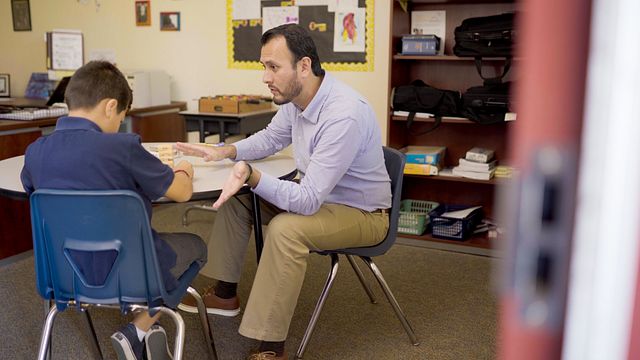
“This is a profession in which you can really change the hearts and minds of many and make a difference. There are many opportunities to be able to transform systems and provide support in more ways that increase your impact in the lives of your students.”
Rodrigo Enciso | School Psychologist and CSOE Alumnus