What Can I Do With a Forensic Science Degree?
Published on: December 3, 2025 | 11 minutes read
By: Tony Borg
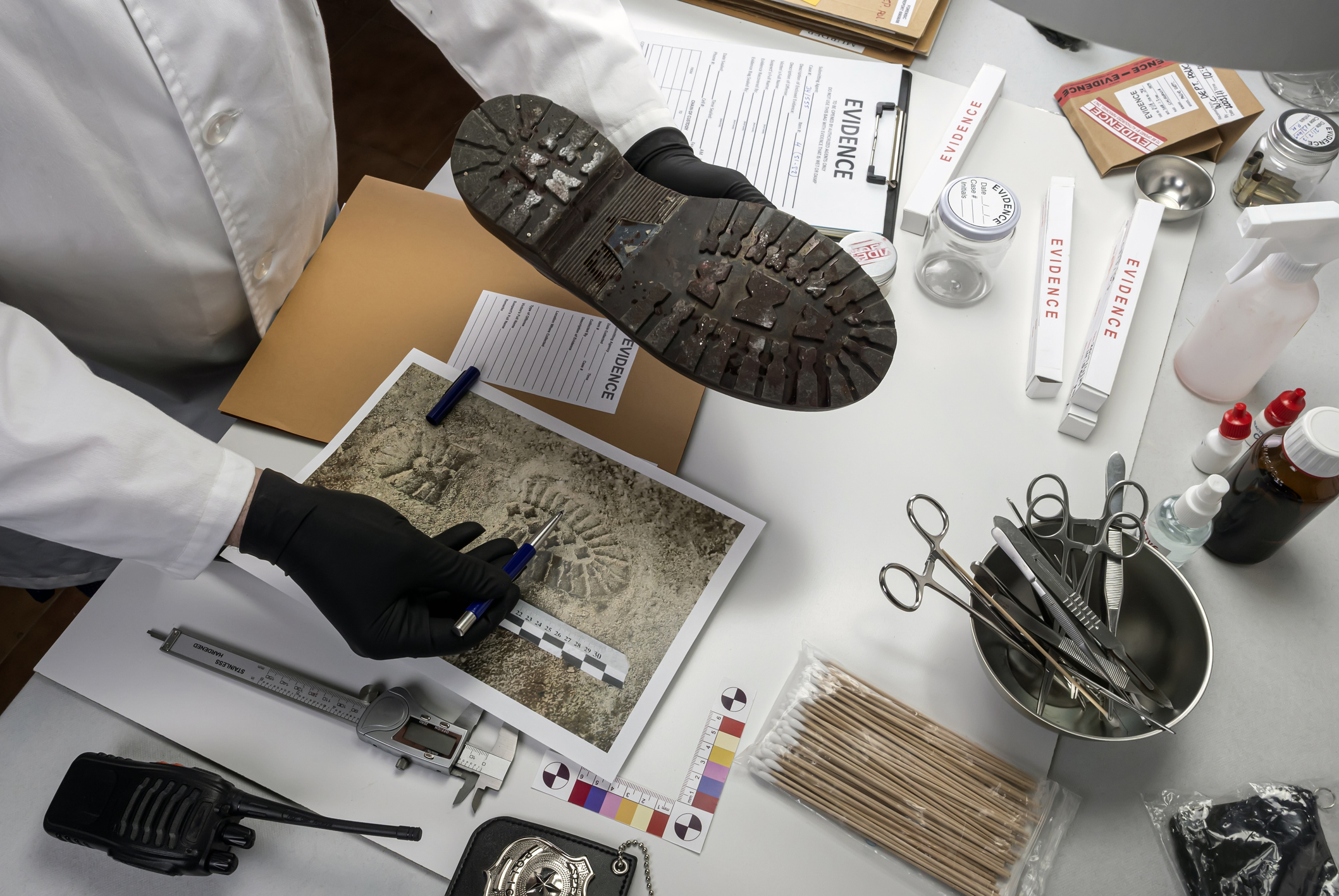
If you’re compelled by the intersection of science, crime, and the law, you may be interested in the idea of pursuing a degree in forensic science. And it’s easy to see why. Forensic science is the scientific study of evidence to solve crimes, combining biology, chemistry, and criminal justice applications. Forensic scientists play a key role in the legal and criminal justice systems, while the subject itself can be endlessly interesting.1,2
Choosing a concentration for your undergraduate or graduate study, however, naturally arrives with a host of questions. Mainly, what does obtaining a forensic science credential entail, and perhaps more importantly, what can I do with a forensic science degree?
Fortunately, there are dozens of career paths to explore for a forensic science major. In this post, we’ll review five potential forensic science career routes and their educational requirements.
1. Law Enforcement and Crime Scene Investigation
Shows ranging from NCIS to Dexter have popularized forensic science and criminal justice and turned it into a national obsession.
Working in the realm of law enforcement and crime scene investigation may not be nearly as sensational as what you might see on television, but it can be a fascinating, valuable way to put a forensic science education to work. Indeed, the Department of Justice (DOJ) asserts that forensic scientists are a “critical element” of the criminal justice system.
Put simply, forensic scientists examine and evaluate evidence to form objective findings on a crime. These may be used to exonerate innocent people or, on the flipside, assist in the investigation, identification, and prosecution of criminals.
But what does a crime scene investigator do, exactly? And what career opportunities might be available in law enforcement?
Law Enforcement
“Forensic police” jobs encompass a broad range of positions in law enforcement.3 A few of the most well-known include:
- Blood spatter analysts – Yes, Dexter’s job is legitimate. Blood spatter analysts are brought in to photograph and scrutinize blood evidence left at the scene of a crime. The goal of this type of forensic work is to figure out the type of weapon used, how the crime happened, and the potential perpetrator. This may be a natural fit for those who have a gift for geometry: Blood spatter analysts are tasked with envisioning how people and objects were positioned when the crime occurred.
- Arson investigators – Arson investigators are forensic specialists whose primary responsibility is collecting evidence at the scene of a fire to determine how it may have started. This may involve interviewing witnesses, taking photographs, and gathering samples.
- Ballistics experts – Ballistic experts are well-versed in firearms. They perform a number of analyses to help law enforcement officials identify potential suspects, such as examining fingerprints, bullet casings, and residue.
Crime Scene Investigator
In a nutshell, crime scene investigators document the scene of a crime.4 Some of the roles outlined above fall under the umbrella of this position, but investigators may take a more holistic view of a crime by collecting and inspecting:
- Blood
- Tire tracks
- Footprints
- Fingerprints
- Hair
- Fibers
Further, crime scene investigators are responsible for preserving the evidence they discover. Their work often leads people to ask, do forensic scientists go to crime scenes? The answer is that it depends on the specific profession within forensic science. Generally, a forensic scientist’s knowledge and discoveries are leveraged to assist with solving crimes and identifying suspects.
Academic Requirements
The education required for these roles varies depending on the exact nature of the position and the employer.5 Some roles may demand a minimum of a four-year degree in science (such as forensic science, biology, or chemistry). Others may only ask for a high school diploma or GED. Many roles might also ask for additional forensic science program certification, but this too depends on the state in which you hope to practice.
2. Laboratory-Based Roles
From analyzing DNA to examining human remains, scientific methodologies have become increasingly vital in criminal investigations because of the precision the results offer.6
Laboratory-based forensic science roles include (but certainly aren’t limited to):
- Forensic toxicologists – Forensic toxicologists test human blood for the presence of drugs, alcohol, and other harmful substances (such as poison) during a crime, such as an auto accident in which intoxication may have played a part.
- Fingerprint specialists – Fingerprints are imperative to solving crimes and identifying perpetrators, as well as absolving innocent persons. According to the DEA, fingerprint specialists use state-of-the-art equipment for the examination, creation, and comparison of what’s called “latent” prints.7 What’s more, they may support law enforcement during investigations, write lab reports on their findings, and testify as expert witnesses in court.
- Forensic biologists – Forensic biologists are precisely as they sound: they assess biological evidence in the wake of a crime, whether it was found on weapons, clothing, or a floor.8 This runs the gamut from bodily fluids to bones, and all may be used to ascertain the time and cause of death through forensic biology. Forensic biologists may also take their work a step further and become experts in DNA analysis, biological chemistry, forensic chemistry, and even forensic botany.
Academic Requirements
Again, the academic requirements hinge on the position and the jurisdiction. A master’s in forensic science is increasingly required of forensic biologists, for example, while aspiring fingerprint specialists may need to obtain a bachelor’s degree in forensic science, as well as certification from the International Association for Identification (IAI) for Certified Latent Print Examiner. If you’re interested in this path, you might also want to explore how to become a forensic science technician.
3. Forensic Psychology and Behavioral Analysis
Are you particularly intrigued by the workings of the human mind and how psychology can be applied to the legal and judicial systems? PhD Forensic psychology online might be the niche you’ve been searching for.9
Forensic psychologists and behavioral analysts perform a range of duties, such as:10
- Conducting competency assessments to determine if a person is fit to stand trial
- Offering counseling services to prisoners and inmates
- Providing advice on treatment strategies for criminal offenders
- Supplying sentencing recommendations
Some forensic psychologists may also choose to go after a role as a criminal profiler—an expertly-trained professional who uses a combination of forensic psychology and meticulous analysis to help investigators identify and prosecute criminal offenders.11
Academic Requirements
You likely notice a theme here: The level of education you may need to become a forensic psychologist rides on the specific role you hope to score and the organization you’re shooting to work for. Some may earn a bachelor’s degree in a related field, like psychology, forensic science, or criminology. Others may go on to obtain a master’s of science in forensic behavioral science to perform research or work as a consultant. Others still might decide to pursue a terminal degree, such as a PsyD or PhD in the field, such as the PhD in Psychology, Public Policy, and Law program, or receive certification from the American Board of Forensic Psychology.
4. Digital Forensics and Cybersecurity
If you have an inborn gift for technology, you might want to explore a path in digital forensics and cybersecurity.
Forensic scientists in this realm have become progressively important to both law enforcement organizations and businesses.12 In short, they recover and examine materials and evidence in digital devices and cybercrimes. This evidence is then weighed in criminal and civil cases, such as:
- Cyber threats and attacks
- Data breaches
- Data leaks
In the case of a cyber-attack, for example, a digital forensic scientist may investigate the evidence they’ve uncovered to determine the fraudster and the extent of the damage caused. But they may also be relied upon to help solve grislier crimes: Tracing the IP addresses in a list of email exchanges led investigators to the arrest and prosecution of the infamous “Craigslist Killer,” Philip Markoff.13
Academic Requirements
Historically, digital forensic scientists earned a degree in general computer science. Due to rising interest in the field, though, several academic institutions are now offering concentrations, degrees, and certifications specifically in the discipline.
5. Forensic Science Education and Research
If you’ve been asking Alexa, “what can I do with forensic science degrees” bear in mind that you may also discover your calling right where you started: In academia.
A criminology professor, for one, may take their knowledge of forensic science to teach at a college or university, where they might conduct courses on:14
- Criminal investigation techniques
- Forensic toxicology
- Forensic chemistry
Another option? Diving into research. Forensic experts are crucial to unearthing new techniques, contributing to advancements, and bettering our overall understanding of this dynamic, indispensable subject.
Academic Requirements
Most professors hold a PhD in their field—or, in this case, forensic science.15
That said, some may accept a blend of a master’s degree, relevant (and impressive) work experience, and an outstanding publishing history.
And if you’re leaning more towards research, you may want to consider a doctorate; the doctorate study is designed to give candidates the tools and training they need to perform in-depth analysis.
What Can I Do With a Forensic Science Degree—and What Skills Do I Need?
It may go without saying that these are only five possible career paths in the large, multidisciplinary arena of forensic science. Others include:
- Forensics manager
- Forensic accountant
- Forensic structural engineer
- Forensic pathologist
- Forensic nurse
- Forensic medical examiner
- Forensic autopsy technique
- Casework examiner16
Each profession may have its own set of academic requirements and essential obligations. But one thing holds steady across the sector: Successful forensic experts are known for their strong analytical and problem-solving skills. Among the essential attributes are key forensic scientist skills that ensure precision and accuracy in their work. They’re also well aware that they’re one piece of a greater puzzle and excel at teamwork and collaboration.
How to Advance With a Forensic Science Degree
Many students begin with a bachelor science track in forensic biology, forensic chemistry, or a related college major. These programs provide general and specialized courses in lab methods, laboratory techniques, and physical science.
Forensic Science Program at Alliant University
Forensic science may seem like a relatively new, hot topic, but the act of applying scientific analysis and reasoning to the law has its roots in ancient Roman and Greek societies.17 Now, it’s used in a vast assortment of cases, from determining if a person was driving under the influence to prosecuting serial killers.18
Whatever career path you have your eye on, we offer a wide range of forensic certificates, Alliant University is here to support your endeavors. The MS in Forensic Science, Investigation, & Technology is an accredited curriculum that equips students with the knowledge they need to flourish in the field through a combination of hands-on training and practical education.
Contribute to a just world with Alliant University.
Sources:
- 25 popular forensic science careers to investigate | indeed.com, April 18, 2024. https://www.indeed.com/career-advice/finding-a-job/forensic-science-jobs. Accessed July 17, 2024.
- “Forensic Science.” Office of Legal Policy, December 11, 2023. https://www.justice.gov/olp/forensic-science. Accessed July 17, 2024.
- 10 forensic police jobs (with duties and requirements) | indeed.com, September 30, 2022. https://www.indeed.com/career-advice/finding-a-job/forensic-police-jobs. Accessed July 17, 2024.
- “Crime Scene Examination.” National Institute of Justice. https://nij.ojp.gov/topics/law-enforcement/investigations/crime-scene. Accessed July 17, 2024.
- “Becoming a Crime Scene Investigator.” How to Become a Crime Scene Investigator. https://www.crime-scene-investigator.net/becomeone.html. Accessed July 17, 2024.
- “Forensic Laboratory Operations.” National Institute of Justice. https://nij.ojp.gov/topics/forensics/forensic-laboratory-operations. Accessed July 17, 2024.
- “Forensic Sciences Careers.” DEA. https://www.dea.gov/careers/forensic-sciences. Accessed July 17, 2024.
- “Forensic Biologist.” ExploreHealthCareers.org, May 6, 2024. https://explorehealthcareers.org/career/forensic-science/forensic-biologist/. Accessed July 17, 2024.
- “Forensic Psychology.” American Psychological Association. https://www.apa.org/ed/graduate/specialize/forensic. Accessed June 25, 2024.
- Cherry, Kendra. “A Brief Overview of the Field of Forensic Psychology.” Verywell Mind, October 18, 2022. https://www.verywellmind.com/an-overview-of-forensic-psychology-2794901. Accessed June 25, 2024.
- What is a criminal profiler? Key Job Duties and Skills. https://www.indeed.com/hire/c/info/what-is-a-profiler. Accessed June 25, 2024.
- Tyas Tunggal, Abi. “What Is Digital Forensics?: Upguard.” RSS, April 26, 2024. https://www.upguard.com/blog/digital-forensics. Accessed July 17, 2024.
- “3 Famous Cases Solved through Digital Forensics.” Eclipse Forensics, January 18, 2024. https://eclipseforensics.com/3-famous-cases-solved-through-digital-forensics/. Accessed July 17, 2024.
- FAQ: What can you do with a forensic science master’s degree? | indeed.com. https://www.indeed.com/career-advice/finding-a-job/what-do-with-forensic-science-masters. Accessed July 17, 2024.
- How to become a college professor | indeed.com. https://www.indeed.com/career-advice/career-development/how-to-become-a-college-professor. Accessed July 18, 2024.
- New Scientist Jobs. “How to Become a Forensic Scientist.” New Scientist Jobs, November 22, 2023. https://www.newscientist.com/nsj/article/how-to-become-a-forensic-scientist. Accessed July 18, 2024.
- Teja, | Sai. “History of Forensic Science .” Texial, January 3, 2024. https://texial.net/history-of-forensic-science/. Accessed July 18, 2024.
- Cassick, Callie, and Fox News. “Criminal Profiling: The Techniques Used by Police to Catch Dangerous Offenders.” Fox News, March 28, 2024. https://www.foxnews.com/us/true-crime-criminal-profiling. Accessed June 25, 2024.
The content of this page is only for informational purposes and is not intended, expressly or by implication, as a guarantee of employment or salary, which vary based on many factors including but not limited to education, credentials, and experience. Alliant University explicitly makes no representations or guarantees about the accuracy of the information provided by any prospective employer or any other website. Salary information available on the internet may not reflect the typical experience of Alliant graduates. Alliant does not guarantee that any graduate will be placed with a particular employer or in any specific employment position.