What is Forensic Pharmacology: 3 Key Concepts
Updated on: August 22, 2024 | 6 minutes read
By: Tony Borg
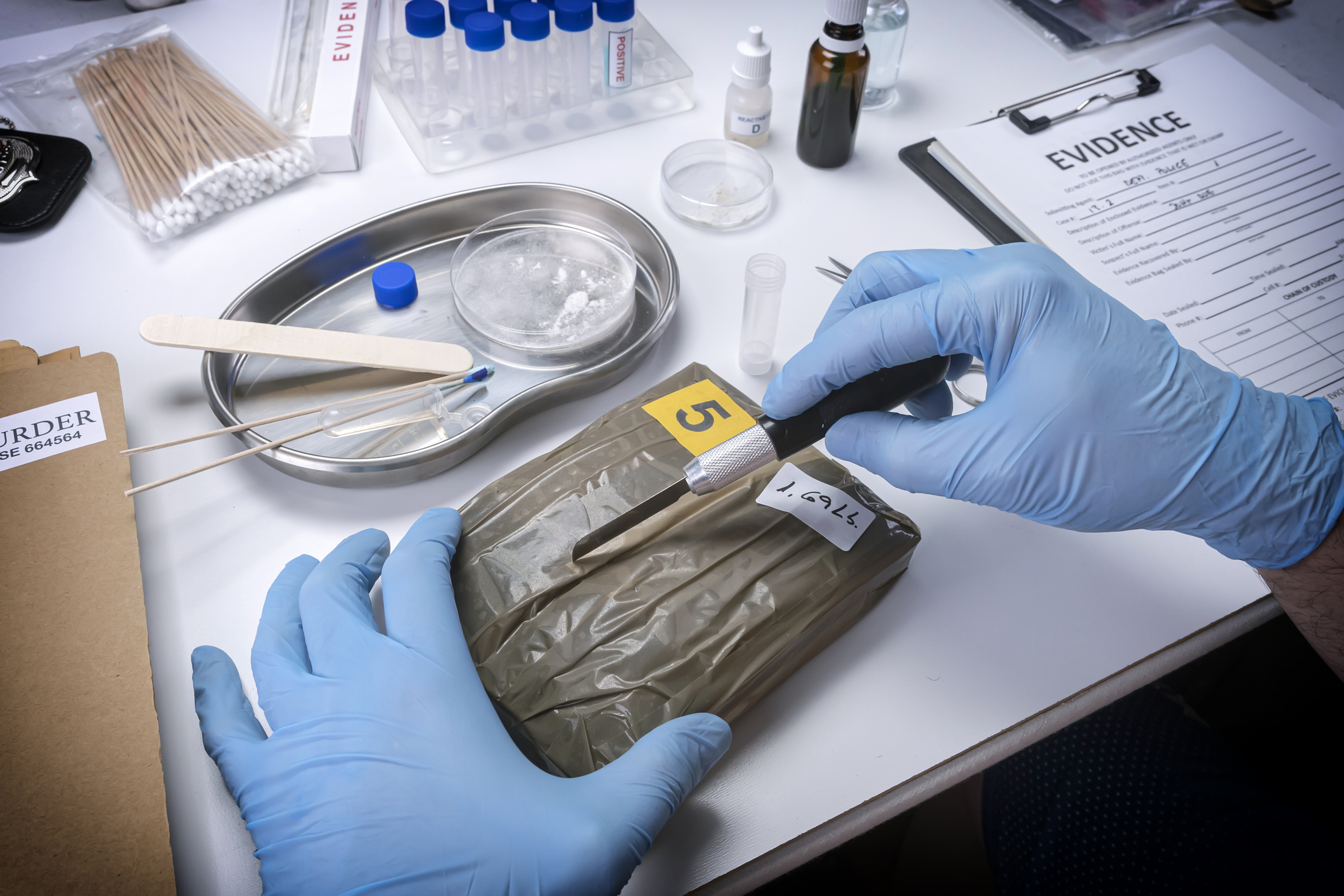
Forensic science is a multifaceted field with a variety of subdisciplines—one of which is forensic pharmacology.
Forensic pharmacology is a branch of the pharmaceutical sciences and forensic discipline. It’s the study of how drugs (both prescription and illicit) impact the body, specifically in the context of crimes.1 Forensic pharmacologists use their extensive knowledge of drugs, poisons, and other substances to assist in legal investigations, solve crimes, support victims, and more.
Since forensic pharmacology is often misunderstood, this guide seeks to demystify it (especially for the future forensic scientists of the world). Whether you’re looking into forensics careers or you’re continuing your education in the criminal justice field, read on to learn more about forensic pharmacology.
The Basics of Forensic Pharmacology
What is forensic pharmacology? Let’s define both of its components:
- Forensics describes anything related to criminal law—while forensics are often connected to investigatory work, forensic tasks can support a wide variety of justice system functions and goals.2
- Pharmacology is the study of drugs, drug interactions, and their effects.3 While many professions benefit from pharmacology knowledge, the pharmacology professionals you’re likely most familiar with are pharmacists—people trained to understand how prescription medications affect patients (and how medicines interact with each other).
In short, the primary focus of forensic pharmacology is to understand how substances (drugs and poisons, for instance) play a role in crime or specific legal cases.
While it might seem like a new, technologically advanced discipline, people have been engaging in conversations about toxins and other substances for millennia—some of the earliest documented discussions of forensic medicine date to the 500s CE.4 Of course, today’s forensic pharmacology relies on cutting-edge technologies and modern scientific knowledge to determine adverse drug interactions.
This is the case for all subdisciplines of forensic science (including the similarly important branch known as forensic toxicology). Forensic science is any scientific discipline that contributes to justice system matters; forensic scientists may be experts in any number of scientific fields (from anthropology to dentistry), and they explore evidence to draw connections in criminal and civil cases.5
Drug Analysis in Forensic Pharmacology
One of the most important concepts in forensic pharmacology is forensic pharmacovigilance. For forensic pharmacologists, that can look like:
- Identifying drugs – Forensic pharmacologists examine samples to identify which substances were present at the time of a crime—both for criminals and their victims, alive or deceased. Forensic scientists use analytical and observational equipment (like analysis machinery and microscopes, for instance) and draw on their knowledge base to identify compounds to assist law enforcement agencies.
- Analyzing drugs – Forensic pharmacologists use their in-depth knowledge of drugs and other compounds to analyze how drugs interact with each other and its adverse effects on the human body to draw conclusions about behavior and thinking during a crime or death investigation.
- Quantifying drugs – Forensic pharmacologists use a variety of machinery and tools to determine the total drug concentration in a subject’s system at the time a crime was committed.
Poison Detection and Analysis
In addition to analyzing drugs, forensic pharmacologists also work to detect and analyze poisons. Specifically, their job role may include:
- Sample collection – Collecting biological samples from both alleged criminals and victims at the scene of a crime is crucial for forensic pharmacologists (and other forensic scientists). However, these samples must be collected both ethically and in ways that limit contamination from the environment.
- Crime scene observation – By making qualitative observations at the scene of a crime, forensic pharmacologists can use environmental conditions and the behavior of witnesses, victims, and assailants to corroborate their lab findings.
- Lab analysis – Like drug analysis, poison analysis requires forensic pharmacologists to use complex and powerful analysis tools: machinery designed for poison testing, reagents for chemical reaction tests, and observational tools (like mass spectrometers and microscopes).
In cases of suspected poisonings, forensic pharmacologist may be on the lookout for common poisonous substances like:6
- Arsenic
- Cyanide
- Strychnine
- Thallium
However, forensic pharmacologists face many challenges when studying these poisons: wear-off times, contamination (and cross-contamination), and personal risk, to name just a few.
The Role of a Forensic Pharmacologist
In terms of day-to-day responsibilities, forensic pharmacologists may:
- Collect evidence from crime scenes
- Run tests and collect data on collected evidence
- Analyze data and test results to compile reports
- Research compounds, past cases, and pharmacological reference texts
- Report their findings to criminal justice departments and workers
To fulfill all of these duties, forensic pharmacologists need a few crucial forensic scientist skills, including:
- Command of the scientific method
- Working knowledge of scientific equipment
- Extensive knowledge of drugs, poisons, and other compounds
- Human biology and humans’ responses to compounds
- Data analysis and documentation skills
In addition, forensic scientists (including pharmacologists) must work accurately, precisely, and ethically to deliver conclusive, impactful results in cases. For those aspiring to this career, learning how to become a forensic scientist is an important first step.
The Future of Forensic Pharmacology
Forensic pharmacologists help the criminal justice system draw conclusions about how substances may have played a role in a case. Not only are they a key contributor to criminal investigations, but their work helps directly provide closure to victims.
If you’re interested in this career path, you’ll need to start with a comprehensive educational program—like the new Alliant International University MS in Forensic Science. Investigation, & Technology program. We work with highly trained instructors, offer students access to cutting-edge technologies, and facilitate hands-on learning experiences that set students up for successful careers.
Apply today and get started on your career.
Sources:
- Malve, Harshad Onkarrao. “Forensic Pharmacology: An Important and Evolving Subspecialty Needs Recognition in India.” Journal of Pharmacy and BioAllied Sciences. April 2016. https://www.ncbi.nlm.nih.gov/pmc/articles/PMC4832912/
- “What Is Forensic Science?” AMerican Academy of Forensic Sciences. 2024. https://www.aafs.org/careers-forensic-science/what-forensic-science. Accessed July 22, 2024.
- “Pharmacology.” National Institute of Child Health and Human Development. December 20, 2021. https://www.nichd.nih.gov/health/topics/pharma. Accessed July 22, 2024.
- Burkhard, Madea. “History of Forensic Medicine.” March 14, 2014. https://onlinelibrary.wiley.com/doi/abs/10.1002/9781118570654.ch1. Accessed July 22, 2024.
- “Forensic Science.” National Institute of Standards and Technology. 2024. https://www.nist.gov/forensic-science. Accessed July 22, 2024.
- Flynn-Steck, Kathy. “Just a Pinch of Cyanide: The Basics of Homicidal Poisoning Investigations.” US Department of Justice. 2024. https://www.ojp.gov/ncjrs/virtual-library/abstracts/just-pinch-cyanide-basics-homicidal-poisoning-investigations. Accessed July 22, 2024.
The content of this page is only for informational purposes and is not intended, expressly or by implication, as a guarantee of employment or salary, which vary based on many factors including but not limited to education, credentials, and experience. Alliant University explicitly makes no representations or guarantees about the accuracy of the information provided by any prospective employer or any other website. Salary information available on the internet may not reflect the typical experience of Alliant graduates. Alliant does not guarantee that any graduate will be placed with a particular employer or in any specific employment position.