6 New Technologies in Nursing that are Changing the Field
Published on: January 26, 2024 | 6 minutes read
By: Alice Bourget
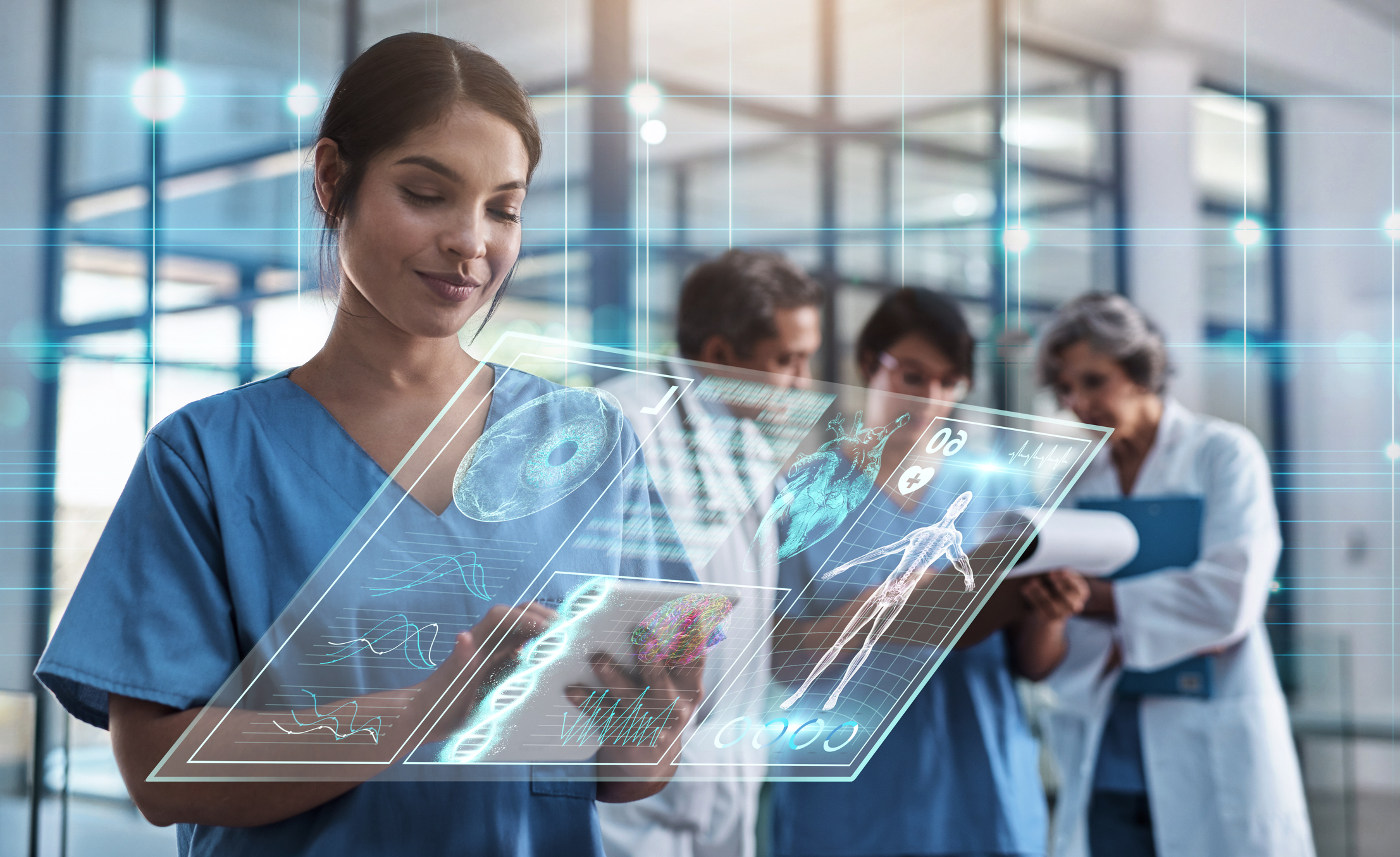
Nursing technology is constantly evolving, and as healthcare innovators develop new tools, the nursing staff can work more efficiently to facilitate positive patient outcomes.
For new nurses or healthcare professionals looking to advance their careers, understanding the technologies currently available and their impacts on patient care is critical. Simply put, knowing how to use nursing tech can make or break a registered nurse’s advancement.
In this guide, we’re shedding light on just a few examples of industry-changing technology in nursing. We’ll look at some of the impacts of technology, explore six must-know innovations, and touch on how nurses can stay ahead of the curve in an ever-changing tech landscape.
The Impact of Nursing Tech
In just a decade, technology in nursing has drastically changed—from wearables to AI, medical devices are only getting more powerful.
Changing technologies have had significant impacts on nursing education:
- Hands-on learning – During internships and practical learning experiences, nursing students must develop familiarity with the latest technologies and demonstrate proficiency to their instructors.
- On-the-job training – Since technologies can vary, depending on the healthcare facility, orientation and training processes for new hires are more in-depth than ever before.
- Professional development – As technologies develop, so must nurses’ skills—many professional development opportunities are centered around harnessing new technology in nursing to improve patient care.
Let’s look at some of the tools, systems, and devices shaping the current nursing landscape.
Wearable and Portable Technology
As technologies become more space-efficient, many devices become available in wearable or portable forms. Just a few examples include:
- Smartwatches – Smartwatches have become ubiquitous across the workforce, but are particularly useful for nurses. Smartwatches can facilitate improved communication, multitasking, and more.
- ECGs – Wearable ECGs can help healthcare providers track patient vitals over time—not just in the clinical setting. Collecting more data can help nurses and physicians come to more informed conclusions about patients’ conditions and needs.
- Ultrasounds – Ultrasounds powered by portable wands and smartphone apps are already transforming the medical industry—with faster, more straightforward access to ultrasound imaging; providers can improve their acute nursing care.
Robotics and Automation
Robotics and automation have only expanded their presence in healthcare, with two widespread examples:
- Automated IV pumps – Automated IV pumps make it easier than ever for nurses to administer IV medications precisely and promptly. Automated IV pumps can also help decrease human error.
- Smart beds – Smart beds can improve patient comfort, prevent ulcers, and increase patient safety in clinical settings.
3D Printing
3D printing plays an increasingly prevalent role in healthcare, and patients have benefited from 3D-printed:
- Medical tools – 3D printing medical tools can help address supply issues and decrease costs.
- Prosthetics – Similarly to medical tools, using 3D printing for prosthesis production can lower patient costs and help designers create more innovative, useful, and safe devices.
- Models – Models and nursing simulation labs are beneficial tools for patient education, treatment simulations, nursing self-evaluations, and more—and with 3D printing, they’ll only become more available.
As 3D printing applications expand, various medical tools and devices will become easier to produce, less costly, and more accessible.
Virtual Reality
Like 3D printing, virtual reality (VR) has vast potential applications in healthcare—and it’s already in use in some clinical settings.
VR is perhaps the most transformative for healthcare education students and trainees. With access to sophisticated VR, students can:
- Get practical experience earlier – The earlier students are exposed to practical skills in healthcare education, the quicker they’ll be ready to treat real patients.
- Combine classroom guidance with hands-on training – With help from VR, students can navigate simulated patient scenarios with input from their instructors and peers.
- Reduce risks – Students can build practical skills in a virtual environment instead of putting real patients at risk.
Telehealth
Telehealth implementation reached its zenith during the COVID-19 pandemic, but patients still use telehealth to access care conveniently and safely.1 Telehealth has bridged several gaps in primary nursing care specifically, like:
- Safer sick visits – For minor (and highly contagious) illnesses, patients don’t have to expose their providers and other patients to infectious bacteria and viruses to seek treatment.
- Simpler well visits and med checks – Telehealth makes it easier for patients who aren’t sick to complete routine checkups and get prescription refills.
- More accessible care – For patients with mobility challenges, limited transportation access, or few clinics near them, telehealth expands their opportunities to receive quality care.
But telehealth also has unique challenges—privacy concerns, for instance, require different management tactics via telehealth than in person. This is why it’s so critical for nurses and prospective healthcare workers to interface with clinical technologies during their professional development.
Artificial Intelligence
Artificial intelligence (AI) technologies like automated data analysis and predictive analytics have helped providers streamline diagnoses, improve accuracy, and forecast patient outcomes. All of these contribute positively to overall patient outcomes and general quality of care.
But the healthcare system has only scratched the surface of what AI can accomplish—one reason why it’s more important than ever for nurses and healthcare experts to lean into technological innovations. The sky’s the limit for AI, and the nurses of tomorrow are sure to encounter AI technologies in their future workplaces.
Stay Ahead of the Curve with Alliant International University
For prospective nurses and experienced healthcare workers, staying ahead of the curve on evolving nursing technologies can improve job prospects and clinical competencies.
If you’re looking for a nursing education program that incorporates top-of-the-line medical technologies, turn to Alliant International University. We offer BSN and MSN-DE programs to help you take the next step in your healthcare career.
Sources:
- Euny C. Lee, Violanda Grigorescu, Idia Enogieru, Scott R. Smith, Lok Wong Samson, Ann B. Conmy, and Nancy De Lew. “Updated National Survey Trends in Telehealth Utilization and Modality (2021-2022).” US Department of Health and Human Services. April 19, 2023. https://aspe.hhs.gov/sites/default/files/documents/7d6b4989431f4c70144f209622975116/household-pulse-survey-telehealth-covid-ib.pdf. Accessed December 18, 2023
The content of this page is only for informational purposes and is not intended, expressly or by implication, as a guarantee of employment or salary, which vary based on many factors including but not limited to education, credentials, and experience. Alliant International University explicitly makes no representations or guarantees about the accuracy of the information provided by any prospective employer or any other website. Salary information available on the internet may not reflect the typical experience of Alliant graduates. Alliant does not guarantee that any graduate will be placed with a particular employer or in any specific employment position.