Is Nursing a Good Career? Exploring the Pros and Cons
Published on: January 21, 2026 | 10 minutes read
By: Lisa Radesi
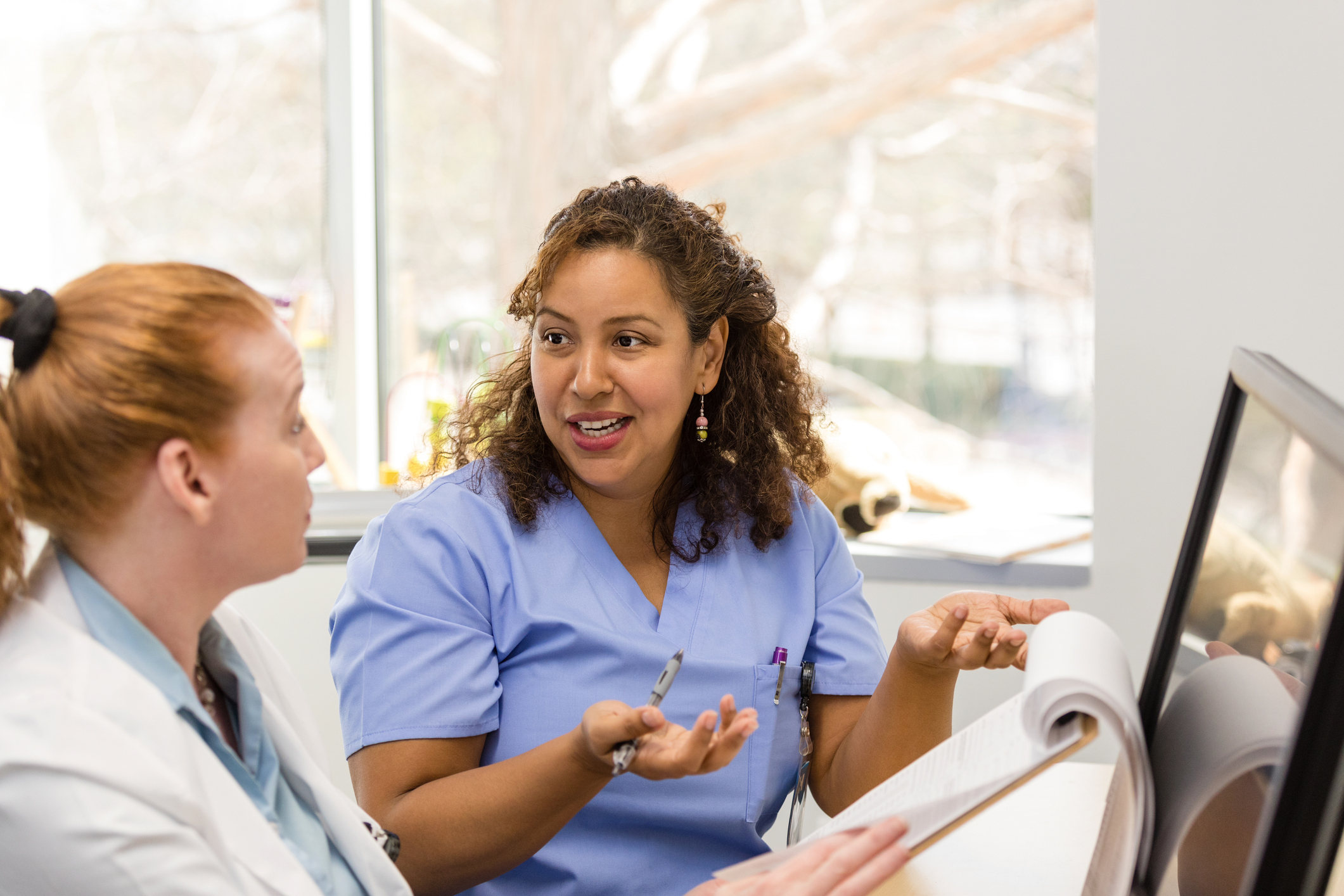
When choosing a career, nursing may seem like a clear path. But the road itself deserves a closer look before you commit to the journey.
On one side are the well-known realities: direct patient care, long shifts, emotional intensity, and high responsibility. Then, there are the less visible elements that only emerge with time: professional stability, varied practice settings, ongoing learning, and the ability to adapt as healthcare evolves. Neither side tells the full story on its own.
Evaluating whether nursing is a good career means weighing these trade-offs with clarity rather than assumption. In this article, we examine the potential advantages and challenges of nursing to help you decide: Is nursing a good career?
What Makes Nursing a Unique Profession?
Nursing sits at an intersection of science and human connection. The nursing profession a respected career and one many people consider when evaluating a long-term career choice. Few other professions require the same blend of technical knowledge, emotional intelligence, and moment-to-moment judgment, which is why many people believe nursing offers a uniquely human approach to healthcare.
A registered nurse may interpret lab results one minute, calm an anxious family member the next, and then collaborate with a multidisciplinary team to adjust a care plan, all within a single shift. This type of nursing work reflects the scope and responsibility that define the modern nursing profession.
At its core, nursing is an applied science. Nurses draw on anatomy, physiology, pharmacology, and evidence-based practice to deliver safe and effective nursing care. However, science alone is not enough. The American Nurses Association emphasizes that nursing also requires compassion, ethical reasoning, and advocacy, especially when patients are vulnerable or unable to speak for themselves.[1]
This balance between data and humanity is what defines the profession.
What also sets the nursing field apart is its range. Professionals can work in various nursing roles such as:
- Hospitals
- Clinics
- Schools
- Community health organizations
- Research settings
- Long-term care settings such as nursing homes
- Nontraditional environments, such as telehealth and public health initiatives
Within these settings, nurses can pursue diverse nursing specialties, such as pediatrics, mental health, critical care, education, or administration.
This flexibility highlights nursing’s central role on healthcare teams. According to the World Health Organization, nurses are often the primary point of contact for patients, playing a critical role in coordinating care across providers and settings.[2]
In practice, this means nurses are rarely working alone. They collaborate with physicians, therapists, social workers, and support staff, often serving as the connective tissue that holds care together.
What are the Daily Responsibilities of Nurses?
A nurse’s day rarely follows a single script, but certain nursing responsibilities anchor the role regardless of setting.
- At the center is direct patient care. Assessing physical and emotional status, monitoring vital signs, administering medications, and responding to changes that may signal improvement or risk. These core tasks define many nursing jobs and shape the day-to-day experiences of new nurses entering the workforce.
- Nurses are also constant observers. Research from the Agency for Healthcare Research and Quality (AHRQ) shows that bedside nurses are often the first to detect early signs of patient deterioration, which can prevent complications when addressed promptly.[3]
- Beyond monitoring, nurses play a major role in patient education and support. This may include explaining a new diagnosis, teaching a patient how to manage medications after discharge, or helping a family understand what recovery may look like at home.
In every setting, nurses act as both caregivers and coordinators, often across long shifts and changing conditions. For those who oversee nursing operations, such as a Director of Nursing, the focus shifts to management, but the goal remains the same: ensuring safety and quality.
What are Good Nursing Skills and Qualities?
Strong nursing skills depend as much on personal qualities as on technical training. Skills can be taught, but how a nurse thinks, listens, and adapts often determines effectiveness in real clinical environments. Many nurses start their journey with a Bachelor’s of Science in Nursing, which lays the foundation for both practical and theoretical knowledge.
- Critical thinking is essential. Nurses constantly interpret data, prioritize tasks, and make decisions with incomplete information. The National Council of State Boards of Nursing (NCSBN) identifies clinical judgment as the core skill that underpins safe nursing practice.[4] For those pursuing advanced roles, programs such as the Master’s of Science in Nursing, Direct Entry allow nurses to build on this foundation and expand their scope of practice.
- Empathy and communication shape how care is delivered and received. Patients are more likely to follow treatment plans when they feel heard and respected.
- Adaptability is another defining quality. Since healthcare environments change quickly, nurses who can adjust without losing focus are better equipped to manage stress and maintain care quality over time.
Nursing Career Flexibility and Specializations
As mentioned, nursing offers a flexible career path, with roles that vary by population, setting, and level of responsibility.
Career Opportunities in Nursing
Nursing careers rarely follow a straight line. Instead, the profession offers a wide array of opportunities that allow nurses to tailor their work to their interests and preferences.
- Many nurses begin at the bedside, learning how patients actually experience illness, recovery, and care.
- Fast-paced environments energize some nurses and keep them close to acute care, refining their skills in settings such as intensive care units or emergency departments.
- Others find they are most effective when working with specific populations, such as children, older adults, or patients managing chronic or mental health conditions.
- As experience deepens, many nurses narrow their focus, developing expertise that allows them to take on more complex cases or mentor others on their teams.
- For those who want to expand their clinical role, advanced practice nursing offers a natural next step. Through graduate education, nurses can advance to roles where they assess patients, make diagnoses, and manage treatment plans.
What makes nursing distinctive is that these transitions do not require starting over; they build on prior experience.
Flexibility
Professional flexibility also enables nurses to continuously tailor their career paths as their clinical interests and lifestyle preferences change. For example:
- An RN might begin in acute care and later shift to rehabilitation or school nursing.
- A nurse might enroll in a doctoral-level program to prepare for leadership roles across education, research, and healthcare policy.
In practice, this means that nursing can accommodate different professional identities: a clinician who thrives on fast-paced critical care, an educator who shapes future nurses, or an APRN who manages chronic conditions in primary care.
What are Some Common Challenges for Nurses?
Nursing is challenging in ways that extend beyond long shifts and physical labor. In particular, the profession’s emotional and mental demands are well known.
Stress, Fatigue, and Burnout
Nurses often witness suffering, complex ethical dilemmas, and high-stakes decision-making, all of which can contribute to stress, fatigue, and burnout.
A systematic review of burnout among nurses found moderate to high levels of job burnout, which are strongly associated with lower quality of life and can affect both well-being and patient care quality.[5]
Professional Environment
Work environments also shape these challenges. Factors such as staffing levels, workload, and communication dynamics influence stress and job satisfaction.
Research suggests that these workplace conditions can significantly affect nurse retention and overall mental health.[6]
Workplace Adversity
Another reality is that nurses sometimes face workplace adversity, including verbal or physical aggression from patients or families. While not discussed in every setting, data show that healthcare workers (including nurses) are disproportionately affected by patient-initiated violence, with notable rates of reported verbal and physical abuse in clinical environments.[7]
Managing these demands requires intentional strategies, including:
- Debriefing after difficult shifts
- Building supportive peer networks
- Seeking out organizational resources like employee assistance programs.
Professional groups also emphasize the importance of work–life balance and access to mental health resources in maintaining long-term career satisfaction. Nurses pursuing advanced leadership roles, such as those enrolled in a Master’s of Science in Nursing, Nurse Executive program, can especially benefit from these strategies, as they prepare to navigate complex organizational and staff dynamics.
The Personal Fulfillment of Nursing
Behind the statistics and responsibilities are countless personal stories of nurses who describe the profession as deeply meaningful. In fact, many nurses describe moments when their presence, advocacy, or clinical judgment made a tangible difference in a patient’s life. These interactions, though unquantifiable, are frequently cited as core reasons why nurses remain in the field.
Research on job satisfaction among nurses points to the importance of psychological and emotional rewards. Studies exploring the relationship between workplace stress and satisfaction suggest that when nurses feel supported and effective in their roles, they report higher well-being, even amid stress.[8]
For example, nurses who help a patient transition safely from hospital to home often describe a deep sense of accomplishment that extends beyond clinical tasks. Likewise, nurses who educate families on managing chronic conditions can see long-term impacts that feel personally significant, even years later. These experiences highlight how nursing is not just a job, but a continuum of care, where small actions often have profound effects.
While no profession is without challenge, many nurses find that the sense of purpose and contribution they experience is a defining source of professional fulfillment.
Embrace a Career That Makes a Difference
Choosing nursing is not about following a reputation or chasing a title. It is about asking yourself:
- How do you respond under pressure?
- What kind of responsibility are you willing to carry?
- Do you find meaning in showing up consistently for others, even when the work is demanding and imperfect?
Nursing offers intellectual challenge, professional adaptability, and moments of genuine human impact, but it also requires lifelong learning. Understanding both sides of the profession clearly is what turns interest into an informed decision.
Here at Alliant University, we prepare future nurses for that reality. Our nursing programs are designed to build clinical competence across diverse care settings, so graduates are equipped not just to enter the profession, but to grow within it.
If you are considering nursing, take time to reflect on your motivations. Then, explore the nursing programs at Alliant and see how we can support your path to a profession that creates lasting impact.
Sources:
[1] Lewis, Lisa S., Lisa M. Rebeschi, and Ellie Hunt. “Nursing Education Practice Update 2022: Competency-Based Education in Nursing.” SAGE Open Nursing. November 20, 2022. https://doi.org/10.1177/23779608221140774. Accessed January 8, 2026.
[2] WHO Newsroom. “Nursing and midwifery.” World Health Organization. July 17, 2025. https://www.who.int/news-room/fact-sheets/detail/nursing-and-midwifery. Accessed January 8, 2026.
[3] Dresser, Susan, Cynthia Teel, and Jill Peltzer. “Frontline nurses’ clinical judgment in recognizing, understanding, and responding to patient deterioration: a qualitative study.” PSNet. December 1, 2021. https://psnet.ahrq.gov/issue/frontline-nurses-clinical-judgment-recognizing-understanding-and-responding-patient. Accessed January 8, 2026.
[4] NCSBN. “Integrating the National Council of State Boards of Nursing Clinical Judgment Model into Nursing Educational Frameworks | NCSBN.” January 19, 2021. https://www.ncsbn.org/publications/integrating-the-ncsbn-ncmm-into-nursing-educational-frameworks. Accessed January 8, 2026.
[5] Shah, Megha K., Nikhila Gandrakota, Jeannie P. Cimiotti, Neena Ghose, Miranda Moore, and Mohammed K. Ali. “Prevalence of and factors associated with nurse burnout in the US.” JAMA Network Open. February 4, 2021. https://doi.org/10.1001/jamanetworkopen.2020.36469. Accessed January 8, 2026.
[6] Khatatbeh, Haitham, Annamária Pakai, Tariq Al‐Dwaikat, David Onchonga, Faten Amer, Viktória Prémusz, and András Oláh. “Nurses’ burnout and quality of life: A systematic review and critical analysis of measures used.” Nursing Open. May 15, 2021. https://doi.org/10.1002/nop2.936. Accessed January 8, 2026.
[7] Kafle, Smita, Swosti Paudel, Anisha Thapaliya, and Roshan Acharya. “Workplace violence against nurses: a narrative review.” Journal of Clinical and Translational Research. September 13, 2022. https://pmc.ncbi.nlm.nih.gov/articles/PMC9536186/. Accessed January 8, 2026.
[8] Buivydienė, Agnė, Lolita Rapolienė, Marija Truš, and Agnė Jakavonytė-Akstinienė. “Connections between job satisfaction and depression, anxiety, and stress among nurses.” Frontiers in Psychology. February 5, 2025. https://doi.org/10.3389/fpsyg.2025.1548993. Accessed January 8, 2026.